Share


New research streamlines the difficult process of integrating bridge-related 3D geometry data and maintenance records stored in, hitherto, siloed systems
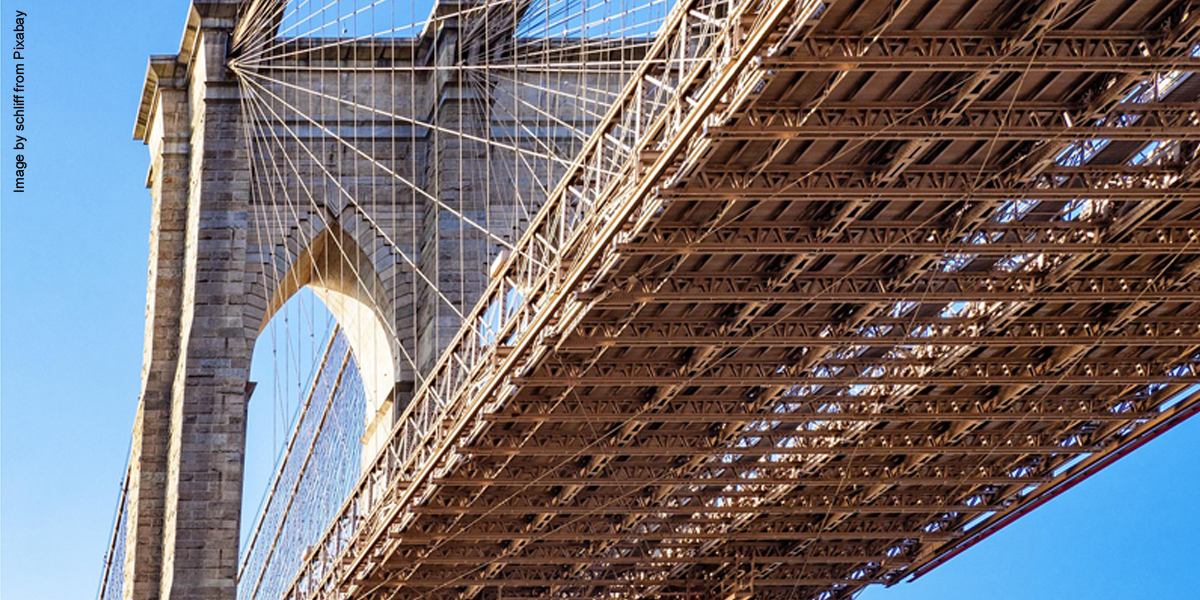
Japan faces the challenge of an ageing infrastructure, especially bridges, where poor integration between field expertise and digital data pose particular problems in the context of timely and cost-effective maintenance.
To address this issue with a novel solution, researchers from Hosei University, Japan, have proposed an integrated data model that merges two international standards—IFC and CityGML—to significantly streamline and advance maintenance workflows, including inspection, diagnosis, and repair planning, for ageing infrastructure. This next-generation technology can lead to a society where future generations can live more securely.
The research ties in with Japan’s cross-ministerial Strategic Innovation Promotion (SIP) Program … one that leverages cutting-edge digital technology to establish a safer, more sustainable infrastructure management system.
As part of this initiative, a research team focusing on the Smart Infrastructure Management System element of the Program has been led by Professor Ryuichi Imai from the Faculty of Engineering and Design, Hosei University. This team includes Dr. Kenji Nakamura, Faculty of Information Technology and Social Sciences, Osaka University of Economics; Dr. Yoshinori Tsukada, Faculty of Engineering, Reitaku University; Dr. Toshio Teraguchi, Faculty of Economics, University of Marketing and Distribution Sciences; and Dr. Chikako Kurokawa, Advanced Technologies Research Laboratory, Asia Air Survey Co. Ltd.
This team has recently addressed the separate and difficult issue of managing bridge-related 3D geometry data and maintenance records such as inspection results and repair history – all too often stored in siloed systems. The findings of this work was recently made available online in the journal Computer-Aided Civil and Infrastructure Engineering.
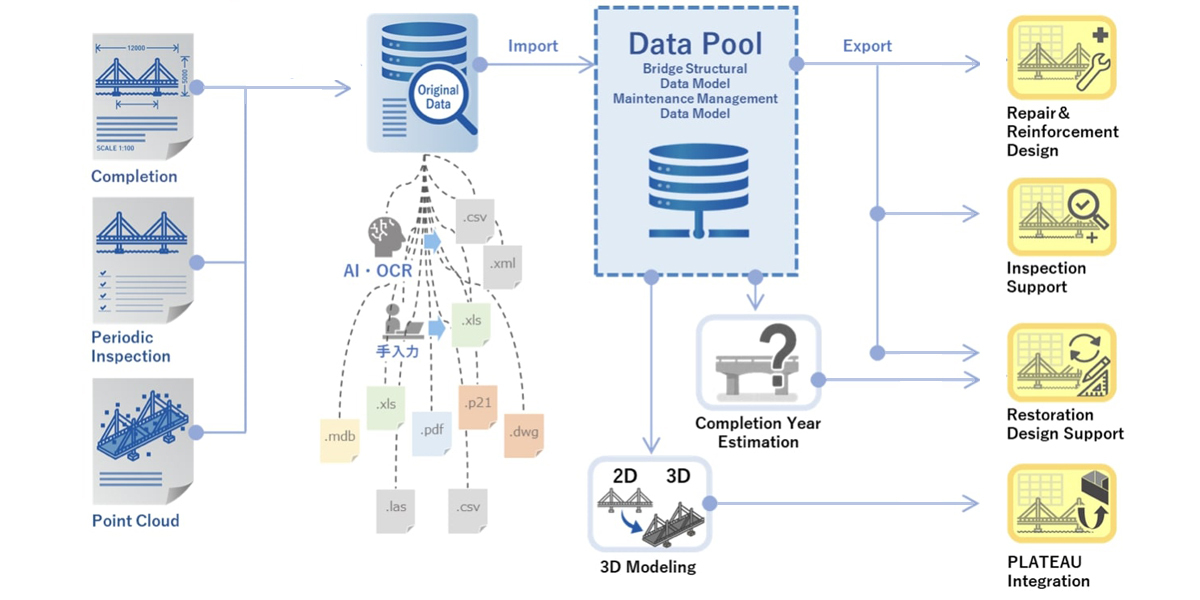
This study introduces a novel integrated data model that merges two international standards—IFC (Industry Foundation Classes) for construction and Building Information Modeling (BIM), and CityGML for geospatial information. The resulting framework enables the unified, one-source management of both 3D geometric data and maintenance information (such as inspection results and repair history). This integration is expected to significantly streamline and enhance maintenance workflows, including inspection, diagnosis, and repair planning for ageing bridges.
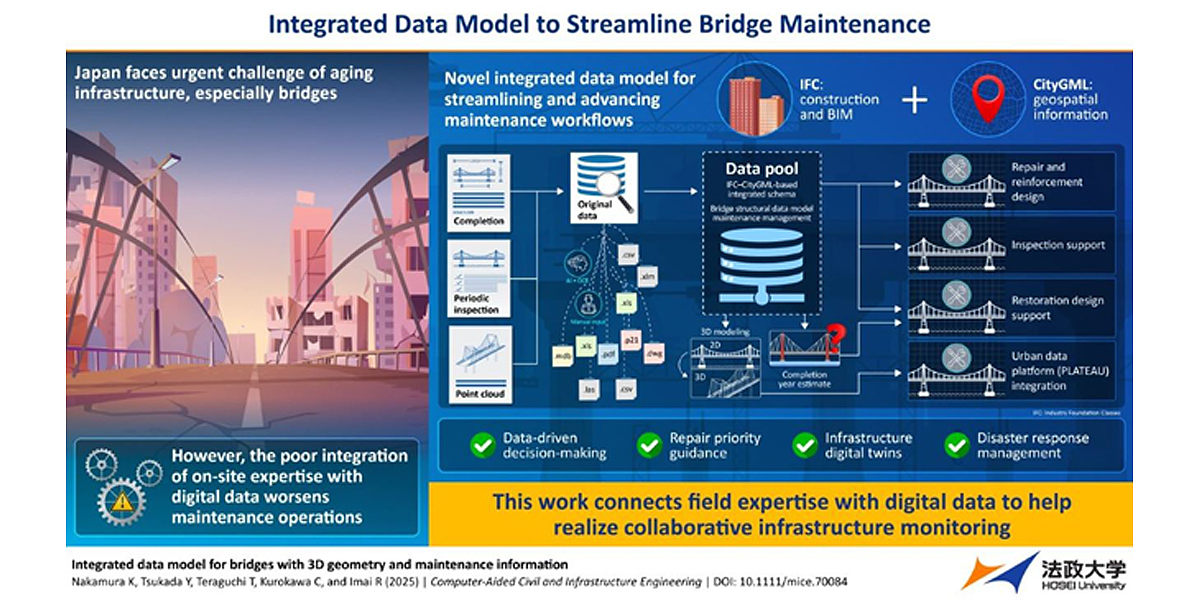
“Our work would allow infrastructure managers, specifically within local government, to accurately assess damage or deterioration of structures found during inspections and past repairs for the numerous bridges under their jurisdiction, all visualised as 3D models. For example, they can instantly check information—either on-site or in the office—like, ‘Is this damage located in the same spot that was repaired five years ago?’ This enables them to make precise, data-driven decisions about repair priorities and the most suitable repair methods. This is expected to lead to improved infrastructure safety and longevity and efficient use of public funds,” remarks Prof. Imai.
The team expects the integrated data model arising from its research to be widely adopted over the next decade as a standard for local government nation-wide, leading to the creation of digital twins for social infrastructure, starting with bridges.
On these digital twins, AI-driven deterioration forecasting simulations would become possible. This would accelerate the shift from reactive maintenance, or fixing things after they break, to predictive maintenance, or repairing at the optimal time before they fail. This will help prevent critical accidents such as bridge collapses and extend infrastructure lifespan, contributing to a society where people can live more safely and sustainably.
Furthermore, during disasters, it will enable an immediate assessment of which bridges are passable, supporting rapid evacuation and recovery efforts.
“In effect, our technology — aimed at connecting field expertise with digital data and realising future maintenance where infrastructure is collaboratively monitored across communities—can pave the way to a society where future generations can live more securely,” concludes Prof. Imai.
Reference
Authors: Kenji Nakamura1, Yoshinori Tsukada2, Toshio Teraguchi3, Chikako Kurokawa4, and Ryuichi Imai5
Title of original paper: Integrated data model for bridges with 3D geometry and maintenance information
Journal: Computer-Aided Civil and Infrastructure Engineering
DOI: 10.1111/mice.70084
Affiliations:
1. Faculty of Information Technology and Social Sciences, Osaka University of Economics, Japan
2. Faculty of Engineering, Reitaku University, Japan
3. Faculty of Economics, University of Marketing and Distribution Sciences, Japan
4. Advanced Technologies Research Laboratory, Asia Air Survey Co. Ltd., Japan
5. Faculty of Engineering and Design, Hosei University, Japan
About Professor Ryuichi Imai
Ryuichi Imai is a Professor at the Faculty of Engineering and Design, Department of Civil and Environmental Engineering, Hosei University, Japan. He obtained a Ph.D. in Engineering from The University of Tokyo. His research interests include intelligent informatics, social infrastructure, civil engineering, architecture, disaster prevention, safety engineering, social systems engineering, construction management, and planning and transportation. He has authored about 70 research articles on these topics and received about 700 citations.
About Hosei University, Japan
Hosei University is one of the leading private universities in Tokyo, Japan. It offers international courses in many disciplines and has a long and rich history. Founded as a school of Law in 1880, Hosei University evolved into a private university by 1920. The university is also home to multiple research centers that conduct advanced research in various fields, including nanotechnology, sustainability, ecology, and more. The university has three main campuses—Ichigaya, Tama, and Koganei—located across Tokyo.
For more information, please visit: https://www.hosei.ac.jp/
Subscribe to our newsletter
Stay updated on the latest technology, innovation product arrivals and exciting offers to your inbox.
Newsletter