Share


How Land Professionals Can Advance Women’s Land Rights
Introduction
Land rights for all is not a niche issue. Secure land rights for women are directly linked to progress across the Sustainable Development Goals (SDGs). They underpin SDG 1 ‘No Poverty’, SDG 2 ‘Zero Hunger’, and SDG 5 ‘Gender Equality’, and support broader goals on climate action and sustainable communities. Yet, women across regions continue to face disproportionate barriers to accessing, controlling, and securing land rights.
This insecurity is not just a legal problem but is shaped by institutional capacity, social norms, land administration practices, and the visibility or invisibility of women’s rights within land information systems. For the geospatial and surveying community, this presents both a challenge and an opportunity: how can spatial data, land administration, and professional practice meaningfully advance women’s land rights?
This article draws on a multi-regional expert survey conducted by the International Federation of Surveyors (FIG). It targeted land professionals, policy specialists, and gender experts across the FIG network in an exercise undertaken by the Women’s Land Rights working group to re-envision its 20-year-old Publication #24 on Women’s Access to Land. Survey findings show that women’s land rights are ultimately won and lost not in law and policy, but in practice, placing surveyors and geospatial professionals at the centre of gender equality in land governance.
Expert Insight Across Regions
Practitioners from Sub-Saharan Africa, Latin America and the Caribbean, and the Middle East and North Africa participated in a multilingual survey using a ranked-choice approach to identify priority barriers and mitigation measures affecting women’s land rights in these regions. The resulting patterns offer practical insights for land professionals seeking to support more equitable land governance.
(i) Legal Barriers: Where Law Meets Spatial Practice
Across most regions, experts consistently ranked legal illiteracy and legal pluralism among the most significant legal barriers to women’s land rights. Conflicts between statutory, customary, and religious systems often create ambiguity over which rights are recognised, by whom, and under what conditions. In some regions, experts also noted that legal frameworks frequently fail to differentiate between women’s and men’s lived experiences, even when laws are formally gender neutral.
For land professionals, these legal barriers appear during routine technical work. Surveyors are often the first to translate abstract legal rights into spatial records, deciding whose names appear on documents, how rights are classified, and whether customary or secondary rights are acknowledged or ignored. When these overlapping legal frameworks are poorly understood, women’s rights may be omitted from cadastral and registration processes.
Experts ranked legal literacy and gender-responsive policy design among the most effective mitigation measures. Land professionals can support these efforts by:
• Explaining land rights and procedures in an accessible language during fieldwork;
• Ensuring that survey and registration processes explicitly accommodate joint and secondary rights;
• Flagging inconsistencies between legal frameworks and on-the-ground practices to policymakers.
In this sense, geospatial and surveying practice acts as a bridge between legal intent and lived reality.
(ii) Institutional Barriers: The Human Face of Land Administration
Institutional barriers featured prominently across regions. Experts highlighted inaccessible land institutions due to costs, distance, language, or administrative complexity, as well as weak institutional capacity, including limited staffing, oversight, and accountability. Poor implementation of existing laws consistently ranked higher than gaps in legislation.
These findings place land professionals at the centre of institutional performance. Land professionals are not just technical intermediaries; they are frontline representatives of the state. Their availability, conduct, and decision-making shape whether land institutions are perceived as legitimate and accessible, including by women.
Experts prioritised solutions such as:
• Ensuring the implementation of passed laws;
• Training and sensitisation of public servants;
• Promoting gender-sensitive and participatory land registration approaches;
• Establishing gender focal points within land administration institutions.
Land professionals contribute directly to these solutions by adopting inclusive field protocols, participating in capacity-building initiatives, and supporting Fit-For-Purpose Land Administration approaches that reduce costs and procedural barriers. Digital tools and innovative surveying methods were seen as valuable enablers, especially when they support reliable, gender-disaggregated registries, but not as substitutes for institutional reform.
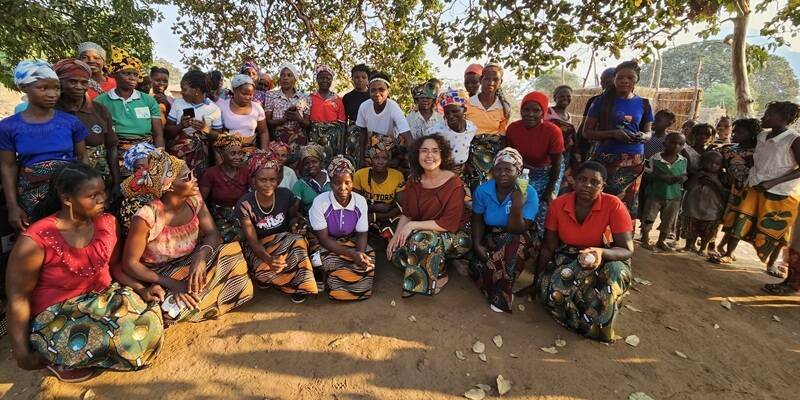
(iii) Socio-Cultural Barriers: Mapping Power and Norms
Among all categories, socio-cultural barriers showed the strongest consensus across regions. Experts unanimously ranked patriarchal norms and the perception of land as a male domain as the most significant constraint on women’s land rights. Inheritance practices were also consistently highlighted, underscoring that gender inequality is entrenched across diverse customary systems.
While social norms may seem beyond the remit of geospatial professionals, experts emphasised that land administration processes often reinforce and reproduce these norms. Who is invited to community meetings, when and where these meetings are held, whose testimony is accepted during boundary demarcation, and whose signatures are considered authoritative all reflect underlying power relations.
To address these barriers, experts prioritised:
• Equitable representation of women in community forums;
• Engagement with customary and traditional leaders;
• Awareness and sensitisation campaigns;
• Continued tracking of gender-justice-related data.
Land professionals can support these measures by staying informed about gender-inclusive practices, designing participatory processes that include women, ensuring safe spaces for their participation, and documenting land rights in ways that challenge rather than reinforce exclusionary norms. In this way, mapping becomes a negotiated social process. Land professionals can also provide clinics for grassroots women to help them understand the procedures for claiming their land rights.
(iv) Socio-Economic Barriers: Education, Data and Opportunity
Across all regions, experts agreed that limited access to education, including high school dropout rates among girls, is the most significant socio-economic barrier to gender-equal land rights. This was closely followed by financial insecurity, including limited access to credit, formal employment, and decision-making power.
Although these barriers extend beyond land administration, experts viewed them as transversal constraints that shape women’s ability to claim, understand, and benefit from land rights. In this context, geospatial professionals contribute indirectly but meaningfully.
Experts prioritised solutions such as:
• Policies promoting girls’ education and school retention;
• Women’s access to formal employment and managerial positions;
• Financial inclusion strategies;
• Improved land and financial literacy.
Land professionals support these efforts by developing transparent, accessible land information systems that reduce information gaps and enable women to leverage land as an economic asset. Reliable spatial data can support access to credit, guide inclusive land-use planning, and inform broader development and resettlement programmes, especially in contexts affected by conflict or climate shocks. Land professionals also play a role in promoting gender diversity within their profession and supporting female surveyors to be active and visible, to counter the idea that “you can’t be what you can’t see”.
From Evidence to Professional Action
Taken together, the expert-ranked barriers and solutions point to a clear conclusion: women’s land rights are determined as much by how land systems operate as by what laws say. Legal, institutional, socio-cultural, and socio-economic factors are deeply interconnected, and land professionals sit at that intersection. This reinforces the idea that land professionals are not only technical specialists but custodians of how land rights are recognised, recorded, and protected. This responsibility places them at the heart of efforts to advance gender equality in land governance.
Land professionals are uniquely positioned to:
• Make women’s land rights visible in spatial data;
• Translate legal principles into inclusive technical practice; and
• Support institutions and communities in navigating competing norms and systems.
Advancing women’s land rights does not require these professionals to become social activists, but it does require professional awareness, ethical responsibility, and a commitment to inclusive practice.
Authors of this article are: Marisa Balas, Kate Fairlie, Rohan Bennett, Christiaan Lemmen
Subscribe to our newsletter
Stay updated on the latest technology, innovation product arrivals and exciting offers to your inbox.
Newsletter