Share


To track progress toward the Paris Agreement and the implementation of effective policies, accurate estimates of carbon sinks and sources are fundamental, says Manuela Balzarolo, who explains why accurate data on the carbon cycle is the key to successful climate negotiations

As delegates convened in Belém, in the heart of the Amazon, a key point of the COP30 discussions revolved around forests, their role in the carbon cycle, and their importance for reaching climate goals. What is certain is that, whether it’s about how forests sequester and release carbon, the role of biodiversity, or the ability of satellite imagery to monitor forest loss, policymakers will continue to require accurate data.
“Implementing successful policies relies on an ever-growing need for studies that analyze the role of ecosystems in the carbon cycle,” says Manuela Balzarolo, scientific leader of CMCC, the EU’s flagship carbon cycle project and a leading global research center on climate change,.
As scientific leader of CMMC – which brings together experts in Earth observation, modelling processes, data assimilation and machine learning on forests and mitigation – Balzarolo emphasizes the need "to provide accurate data for decision-makers to act on".
“We’ve made progress in many areas – we now better understand how much carbon forests can absorb. However, there’s still room for improvement. There are issues related to ecosystem vulnerability and population dynamics or the time it takes for an ecosystem to resume absorbing carbon once restored that need further study,” she continues.
One such example is the new database on terrestrial ecosystem productivity. The global database containing net primary production measurements from 456 sites across major terrestrial ecosystems worldwide has the potential to enhance climate models and ecosystem management worldwide.
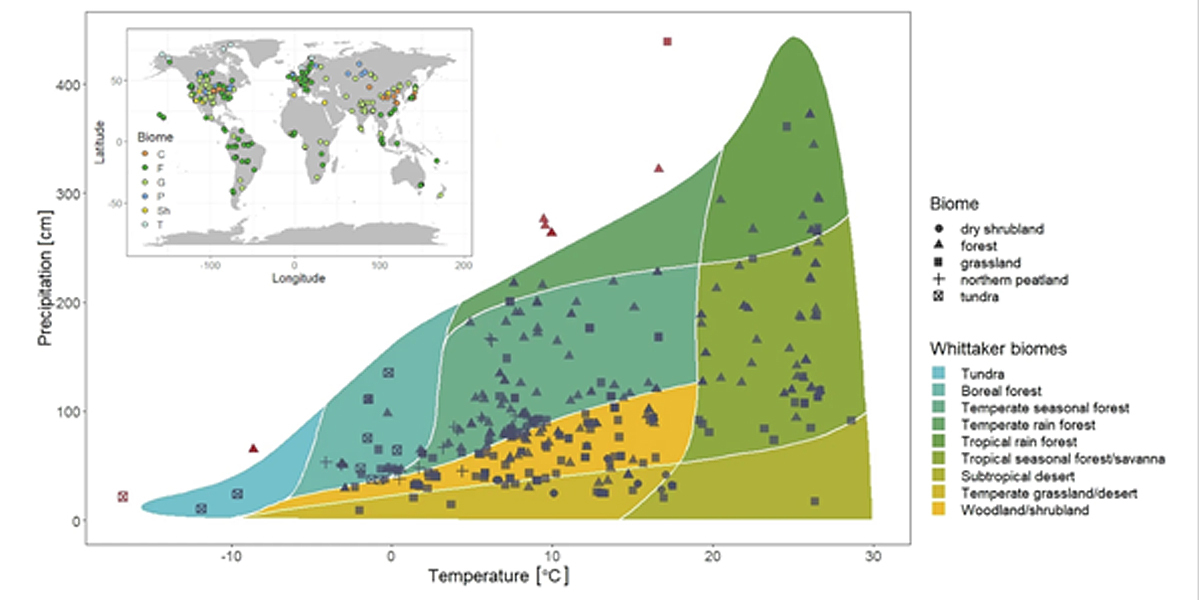
“Net Primary Production (NPP) is a fundamental measure of biomass production in ecosystems,” explains Balzarolo. The importance of studying elements such as NPP production extends far beyond academic research. “Net primary production is a key variable in the global carbon cycle and the Earth system” which we now have a clearer grasp of thanks to the new database.
Closing the modeling gap
New research on the carbon cycle (CONCERTO) also seeks to fill a fundamental blind spot in climate models. "There are processes which are not yet fully described in Earth system models, and this lack of inclusion of processes – such as the role of ecosystems in the carbon cycle – brings uncertainty to the models," Balzarolo explains. "This is why it is necessary to focus on better understanding these processes."
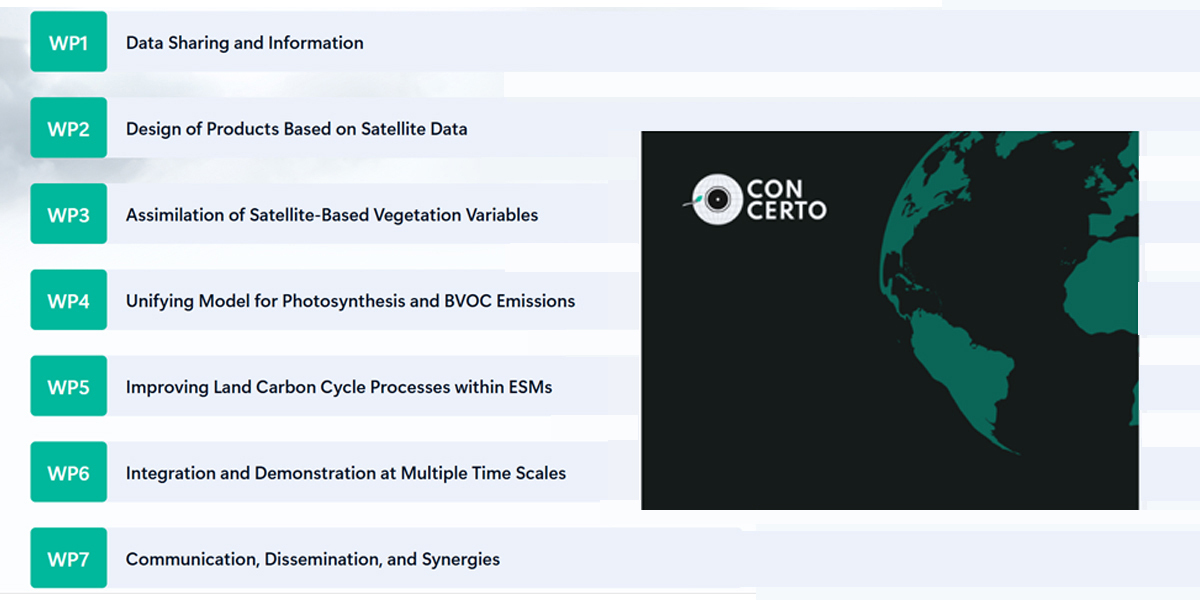
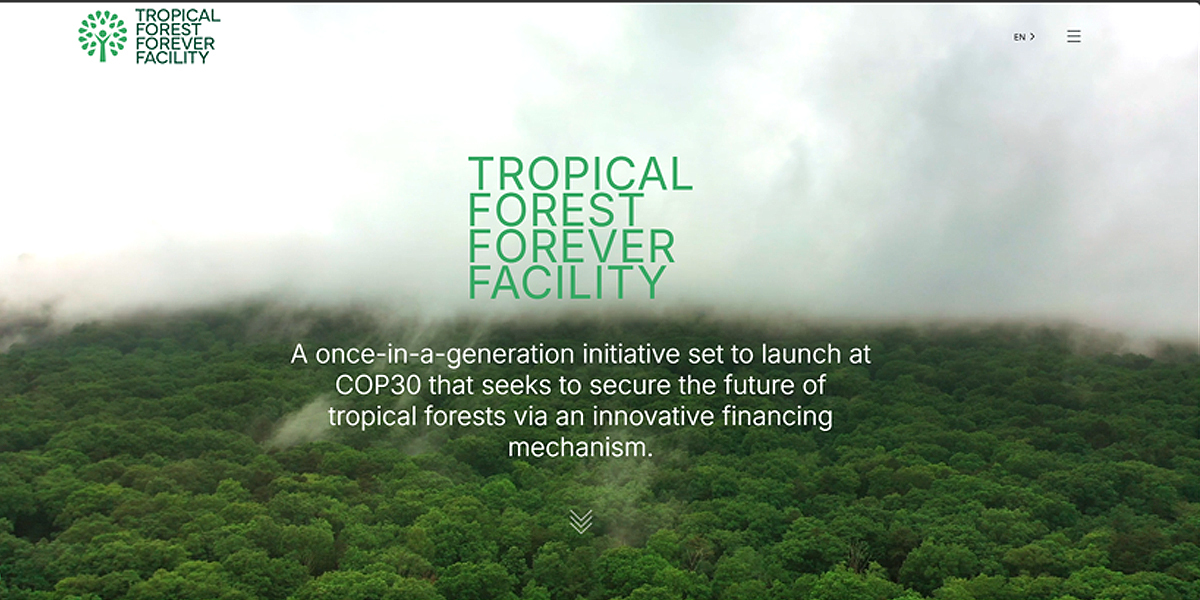
These gaps have real consequences. Without accurate estimates of carbon sinks and sources, policymakers will find it much harder to track progress toward Paris Agreement goals, design effective mitigation pathways, or assess the effectiveness of initiatives and policies such as those enshrined in the Tropical Forests Forever Facility (TFFF). Balzarolo’s work directly tackles this challenge by incorporating land processes missing from current models and improving representations of ecosystem dynamics in Earth system models.
“As initiatives such as TFFF develop, there will be a growing need and interest in studies that seek to analyze the role of ecosystems in the carbon cycle,” she says.
Data and satellites
Part of this process involves quantifying both the distribution and changes in land use. In this regard, modern forest monitoring has been transformed by advances in satellite technology. "The use of satellite data – which can now reach up to a ten-meter resolution – has become a fundamental part of any discussions around land and forestry management," Balzarolo notes.
This is apparent as delegates convene at the COP30 to discuss the implementation of the TFFF, the success of which will also depend on credible, transparent, and operationally sound monitoring systems.
However, without accurate understanding of how forests sequester and release carbon – and how they respond to climate shocks – policymakers lack the foundation for evidence-based climate action.
Balzarolo's work contributes to position CMCC as a leading voice in bridging this gap by combining remote sensing, advanced modeling, and ground-based validation, creating the scientific infrastructure that COP30 negotiators need to design climate pathways grounded in reality.
Yet resolution is only part of the story. While satellite imagery reveals deforestation with remarkable clarity, at times the ecological realities behind deforestation remain uncertain. "We can now understand the spread of deforestation a lot better as it shows up quite clearly on satellite images," Balzarolo acknowledges, "but we still need to do a lot of work to understand the impacts that these processes have – including the time that it will take for an ecosystem to return to a condition whereby it absorbs carbon, as well as issues tied to biodiversity."
This is where integrated approaches championed by Balzarolo gain traction: combining satellite data, field observations, and advanced modeling to capture the full picture of how forests respond to — and recover from — environmental stress.
"The goal is to understand how to better simulate ecosystems and improve the quality of the data," says Balzarolo.
More resources:
• Read more about CONCERTO and how it aims to develop a novel framework for understanding, monitoring and modeling the terrestrial carbon cycle.
• Read more about our studies on net primary production and its impact on the carbon cycle here.
• Watch Manuela Balzarolo’s webinar on the impact of climate change on ecosystems here.
Manuela Balzarolo is a senior scientist of the Division on Impacts on Agriculture, Forests and Ecosystem Services at the Institute for Climate Resilience of the Euro-Mediterranean Center on Climate Change Foundation. She has more than 15 years of expertise in remote sensing applications for terrestrial ecosystem monitoring, with a focus on modelling the impact of climate change and extremes on ecosystem functions and carbon cycle.
Story Source: The Euro-Mediterranean Center on Climate Change (CMCC)
Subscribe to our newsletter
Stay updated on the latest technology, innovation product arrivals and exciting offers to your inbox.
Newsletter