Share


Adam Price of Spirent argues that only high-quality simulators like Spirent’s PNT Xe can deliver the controlled, repeatable GNSS testing needed for safety-critical devices, making rigorous testing the key takeaway.
By: Adam Price, VP PNT Simulation, Spirent.
Sometimes the most basic questions are the most important ones. In fact, some of the most fundamental technologies in our modern world rely on answers to questions like “where am I?” and “what's the time?”
Position, Navigation and Timing (PNT) refers to a collection of services and technologies that help us understand that. Within that collection, the Global Navigation Satellite System (GNSS) is perhaps the most important.
GNSS measures distance and time through the trilateration of satellite signals. These GNSS satellites are constantly broadcasting signals that include precise time stamps from their onboard atomic clocks and their exact orbital positions (ephemerides). GNSS receivers - which could be in a mobile phone, a computer or a device onboard an airplane, ship or car - listen to those signals and in turn, derive their position and timing by measuring how long each signal takes to arrive from a collection of satellites in view.
This is a technology which underpins any number of the industries on which we rely every day: It keeps planes in the sky, financial services trading, power grids online, supply chains running, and agriculture blooming. It is the precision and reliability which GNSS signals provide, which makes it one of the fundamental technologies of a modern globalised world.
Production testing is crucial for reliable GNSS
Positioning is both performance and safety critical for a wide range of vehicles, equipment and devices. When it comes to the next generation of vehicles, for example, autonomous cars and advanced driver assistance systems (ADAS), rely profoundly on PNT, needing to acquire continuous precise position and time. This is not just critical for their performance, but their safety too. Moreover, it’s critical to the manufacturer’s compliance status with a range of regulations, which will be at risk if they can’t deliver reliable positioning in their products.
If the positioning solution of the product cannot meet the necessary standards, after they’ve rolled off of the production line - then the risks to the vehicles, and its passengers could be grave. That’s just as true of cars as it is of the array of smartphones, wearables and other position-dependent devices that require reliable GNSS to even function properly. Much will be expected of these devices, and thus it should also be expected that these devices will be tested thoroughly under high standards at every step of their production.
Unreliable Testing = Unreliable Results
In many areas, however, the manner in which GNSS devices are often tested is startlingly unreliable, under conditions which can neither be reliably controlled nor repeated.
Open Sky Testing, for example, involves feeding live sky GNSS signals into the production facility so that devices can lock onto the satellite signals present at that location. A GNSS repeater is often used along with roof-mounted antennas to channel live GNSS signals into the production facility - testing the product with these signals. In other cases, recordings are made of the live signal environment near the test facility, those recordings are then played to each tested device to ensure that it can acquire those signals and carry out the functions within its specifications. In other cases, testers will use low quality GNSS simulators, to create synthetic signals which can in turn be used to verify a device's capabilities.
Despite widespread use, these methods are gravely insufficient. Open Sky Testing, for example, relies on the live radio frequency (RF) environment that happens to be at the given testing facility. It’s fundamentally dependent on whatever satellites might be in view. As a result, these conditions can’t be controlled or repeated. For example, if a receiver fails during a test - Open Sky Testing will make it hard to know whether that failure is to do with the radio frequency environment or with the receiver itself. This will require investigation, thus slowing down production.
Similarly, GNSS rebroadcasting suffers from the same drawbacks, making findings impossible to repeat or control and making it difficult to quantify performance anomalies or analyse their root causes.
When it comes to recording and replaying GNSS signals during test, conditions are at the very least repeatable and controllable. However, recording the signals often reduces the dynamic range or even alters signal characteristics, thus warping their fidelity and reducing their actual test value. Replay devices also have finite storages, so test scenarios can only run for the duration of the recording. When the recording ends and restarts, the GNSS time in the RF signals jumps backwards, forcing the Devices under test (DUTs) to reset and re-acquire, adding extra operational steps and reducing overall test efficiency.
Finally, merely using a low-quality GNSS simulator may provide a more repeatable and controllable setup than live-signal methods, the poor signal architecture often results in unstable signals and introduces undetected variations into test conditions that should remain clean. In some cases, the power level fluctuation of low-quality simulators can exceed the DUT’s pass/fail thresholds, invalidating the QA process. In addition, hardware and circuitry limitations in such devices can generate RF noise, undermining overall test reliability.
Given the incredible pressure on GNSS technology to uphold so much of the modern world’s underlying technology, these methods are plainly insufficient: They fail to provide the trust and consistency that should be basic to testing.
Controllable and repeatable test environments
The idea that any part of a test environment is out of the control of the tester, should be anathema to anyone testing GNSS. With a reliable GNSS simulator, however, the tests can be generated with precisely the constellation and signal conditions needed - including those that are not presented in the live sky at the test site. Equally important is the ability to evaluate product-to-product consistency under identical conditions. When every DUT is subjected to the same predefined scenario, manufacturers can accurately compare units, identify deviations, and maintain uniform performance standards across entire batches. Controlled test scenarios give production teams the confidence that a unit passed because it met the requirements.
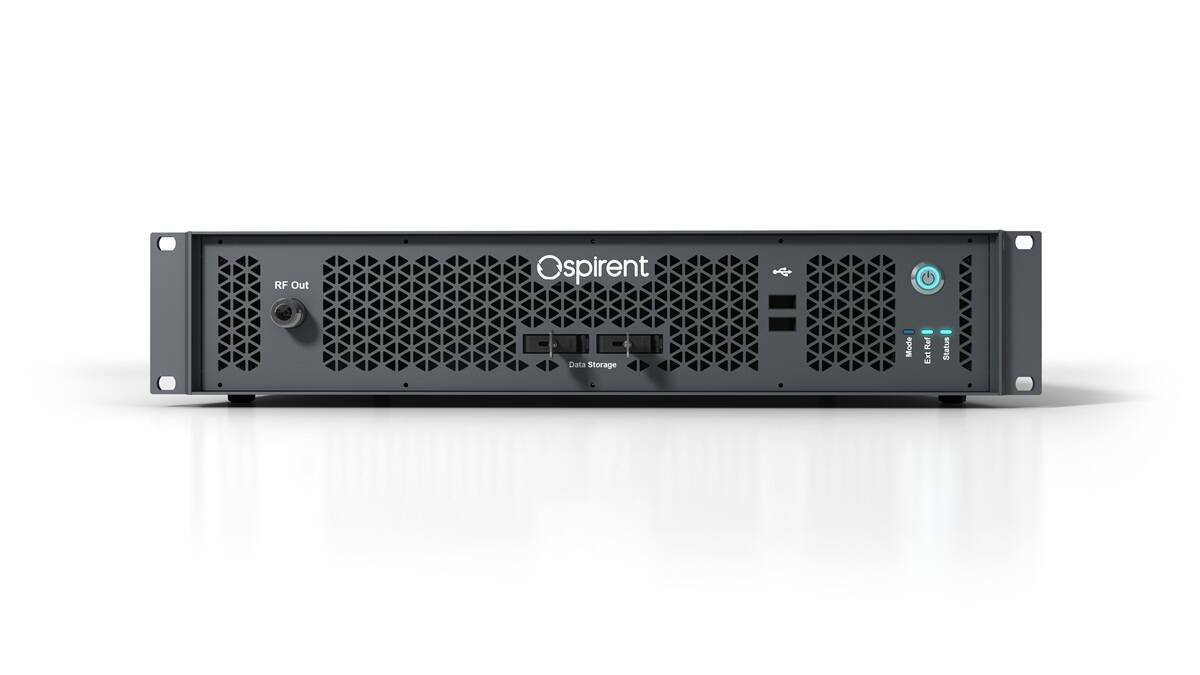
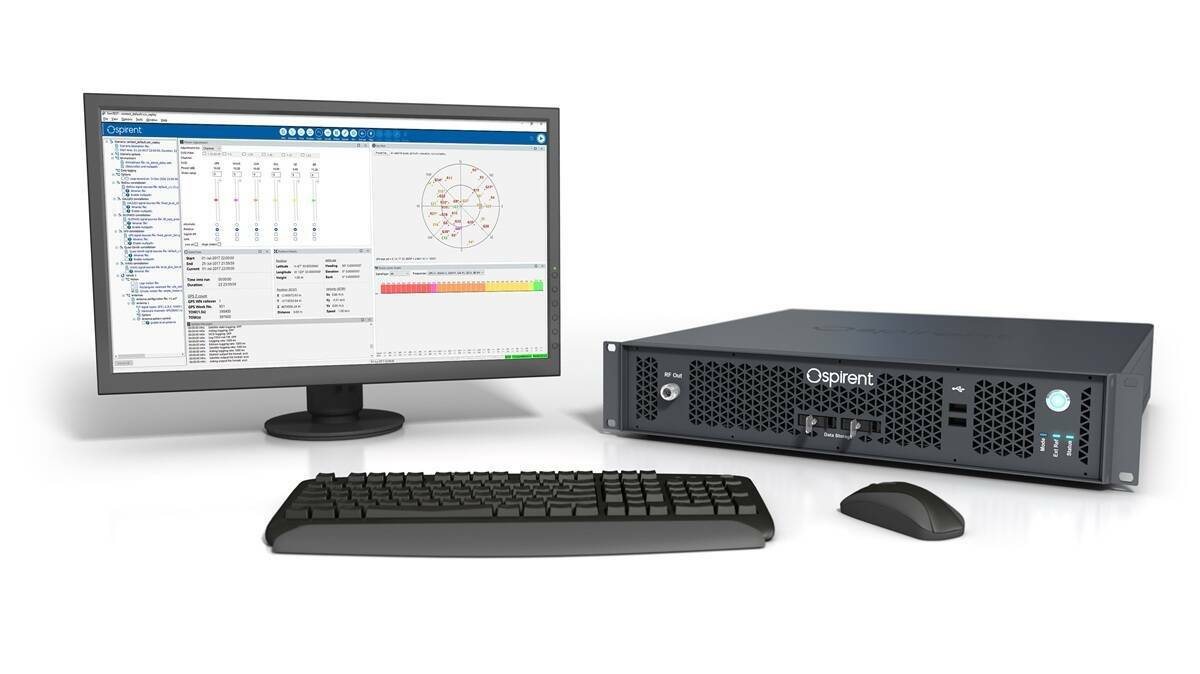
At the heart of the controllable and repeatable test environments, is the reliability and durability of the test device itself. A high-quality GNSS simulator - such as Spirent’s new PNT Xe simulator - produces accurate, stable and repeatable signals that do not drift or degrade over time, ensuring that today’s test condition is the same as yesterdays and tomorrows. This consistency is what allows production lines to scale, to maintain quality across 24/7 shifts and different facilities, and to trace performance reliably throughout the lifecycle of a product.
The 2023 update to The economic impact on the UK of a disruption to GNSS by the London School of Economics (LSE) judges the very fact of GNSS technology to be worth £13.6 billion to the UK economy due to all the sectors that fundamentally rely on it, most notably in emergency services. In fact, since the 2017 issue of that report - the value of GNSS to the UK economy has increased by 102%. Given that reliance, the report imagines that a 7-day outage to GNSS systems would cost the UK economy £7,645 million.
As a fundamental technology to so many industries - and many pieces of critical infrastructure - it is absolutely crucial that GNSS devices can be relied upon. Those that can will reap the benefits in the global share of this multi-billion dollar market. Increasingly, those that capture that market share will be those who can test their devices effectively. In turn, that means doing away with these fundamental weaknesses in current testing methods.
Most of all, however, consumers need to trust these devices as a simple matter of personal safety, and manufacturers need to ensure that that trust isn’t misplaced.
Subscribe to our newsletter
Stay updated on the latest technology, innovation product arrivals and exciting offers to your inbox.
Newsletter