Share


The future of surveying is beneath our feet, and there is no better time to explore it than now, writes Hexagon’s Matthias Twardzik

For decades, subsurface detection has remained under the radar in the surveying profession. Once viewed as a niche discipline requiring highly specialized knowledge and expensive equipment, detection work was seen as more trouble than it was worth. Ground-penetrating radar (GPR) technology, in particular, had a reputation for being costly, complex, and difficult to justify from a business perspective.
This perception is rapidly becoming outdated. Two trends are converging to make detection one of the most promising growth areas in surveying. Technological advancements have made detection solutions more accessible than ever before, while market demand for subsurface intelligence continues to surge across industries such as construction, urban development, and environmental monitoring.
From complexity to accessibility
Over the past decade, substantial R&D has evolved detection technology into user-friendly systems that integrate seamlessly with existing surveying workflows.
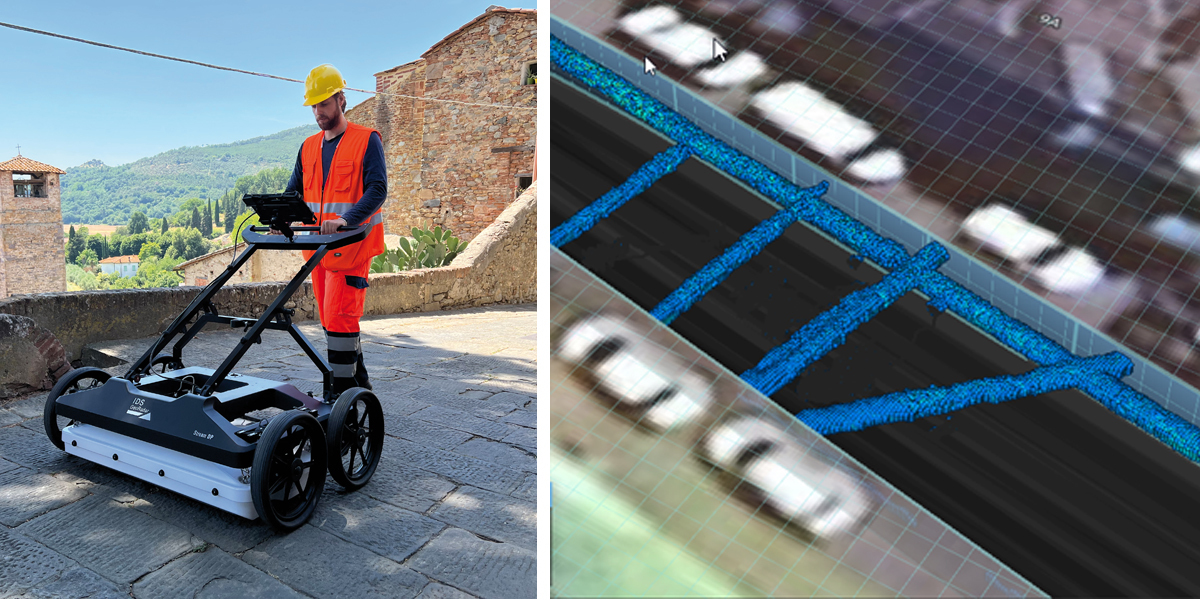
Traditional 2D GPR relies on online scans and does not offer many contextual insights. However, emerging 3D array systems provide comprehensive subsurface coverage, creating detailed tomographic views of underground conditions. These systems give full-area coverage and can identify subsidence risks, analyze pavement conditions, and map complex utility networks with unprecedented detail. They come as both portable and vehicle-mounted systems, depending on the application.
For example, UK-based geospatial company, Severn Partnership, adopted a vehicle-mounted GPR system and paired it with their existing overground mapping system. With this, they were able to complete a topographic and underground survey of a town in Shropshire as part of a larger drainage improvement project.
The team quickly saw big benefits: “Innovation and investment keep us at the forefront of the industry,” said Ben Barnard, commercial director of Severn Partnership. “Stream UP is one of the latest examples. We’re the first company in the UK that is integrating mobile mapping with GPR for simultaneous data capture, which is giving us a unique place in the market. And in less than seven months, we’ve won new clients and significant work.”
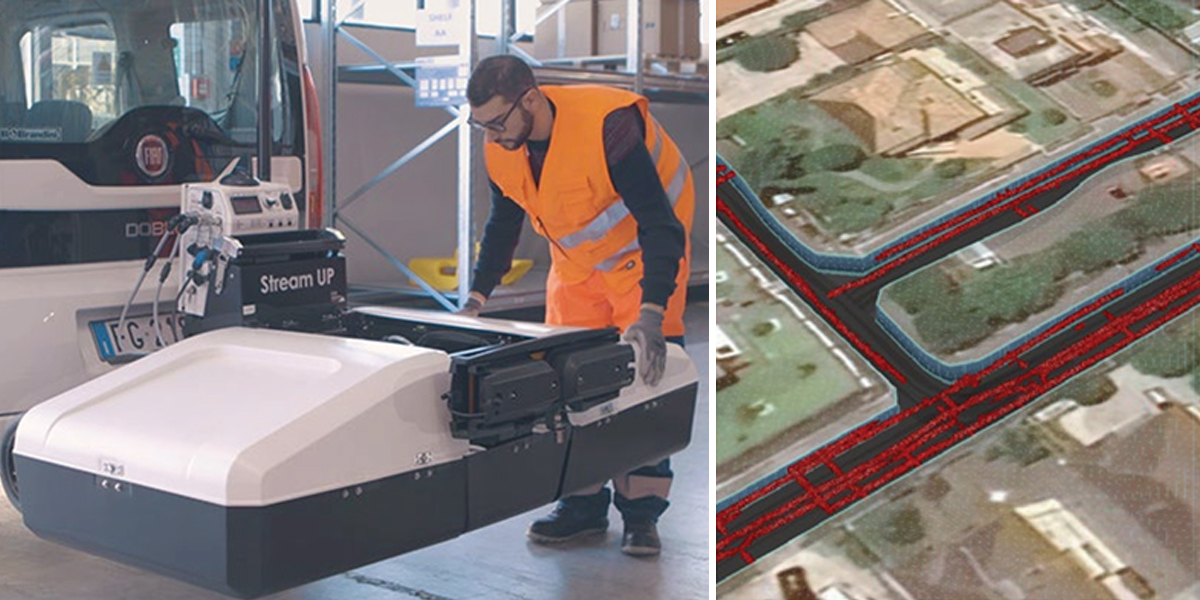
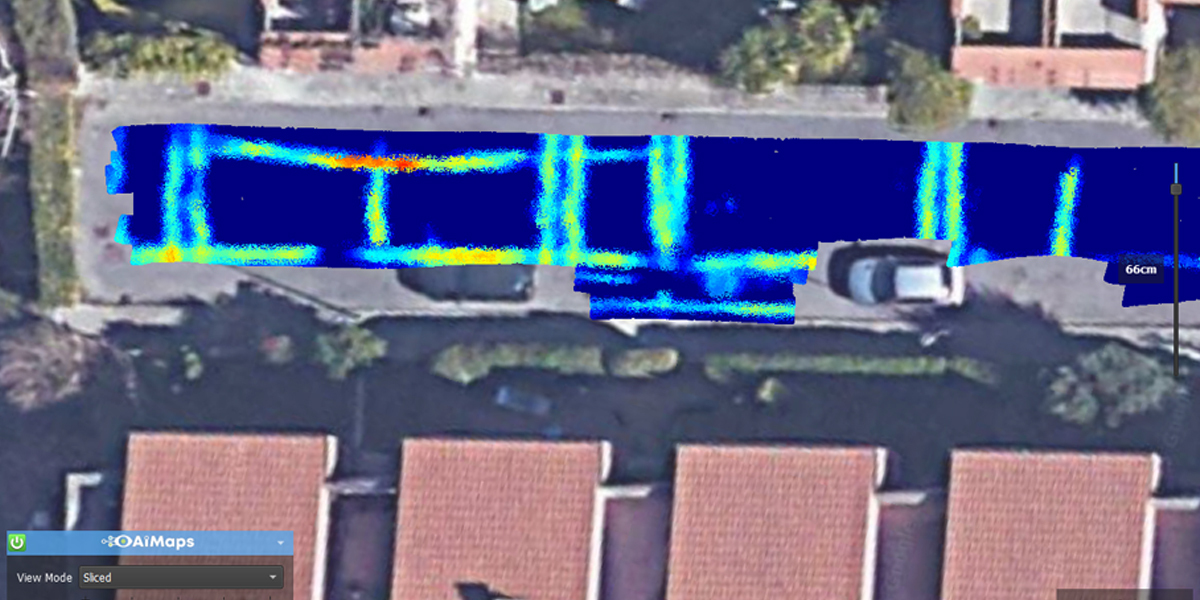
Modern GPR systems now feature intuitive interfaces that make data collection straightforward, even for operators without extensive surveying expertise. The integration of artificial intelligence into detection workflows has greatly improved data interpretation and consistency of results. These deep-learning algorithms produce clearer 3D visualizations of subsurface features and therefore generate high-impact deliverables for customers.
One recent advancement in GPR performance is Equalized Scrambled Technology (EsT), developed by IDS GeoRadar. EsT makes it easier to distinguish real subsurface targets from background noise in GPR data, producing a 40-60% increase in depth penetration. This enables surveyors to better detect very small targets like fiber optics and identify deep targets like sewage pipes in a single pass.
With EsT technology, signals that might previously have been lost in background noise are now more easily identified as true targets.
Importantly, this development enhances the services that a surveyor can provide to clients; for example, offering pavement analysis or bedrock identification on top of the regular deliverables.
Synergies with surveying
Surveyors already possess the core competencies required for effective detection work: spatial data collection, precision measurement, and accurate documentation. So, integrating these services into regular surveying practices represents a natural evolution rather than a dramatic change.
For example, modern GPR systems integrate into normal positioning and data capture methods, meaning subsurface data can be integrated more easily into a surveyor’s existing technology and skills toolbox, like GNSS and total stations. This creates an opportunity for businesses to embrace new projects from customers seeking overground and subsurface models.
Detection services also enhance surveying’s existing collaboration with engineering and construction professionals, where surveyors can add to the underground data already provided by those teams. This alignment of skills, tools, and position in the industry makes surveyors ideal candidates for expanding into underground detection.
The growing demand to dig below the surface
While technology advancements have made detection more accessible, certain market forces are driving high demand for subsurface intelligence.
1. Safety and risk management: The most immediate driver of subsurface detection demand stems from safety concerns and risk mitigation. Utility strikes during excavation work represent a massive economic burden. According to the CGA's 2022 "Dirt Report," in the United States alone, $30 billion (roughly €26 billion) is lost annually from assets damaged during excavation work; globally, that number is estimated at $100 billion.
Beyond the financial impact, these incidents pose serious safety risks to workers and the public, particularly when they involve gas lines or electrical infrastructure.
Regulatory bodies worldwide are responding with increasingly stringent requirements for subsurface investigation before excavation, increasing the demand for GPR solutions and transitioning them from optional to mandatory for many projects.
2. Infrastructure modernization: To tackle ageing infrastructure across the globe, governments are undertaking massive modernization programs which require detailed mapping of existing underground assets beforehand.
The complexity of modern underground infrastructure networks, with their dense concentrations of utilities, telecommunications, and specialized networks, makes accurate subsurface mapping essential for project planning and execution. Simple location services are no longer sufficient. Clients need comprehensive, accurately georeferenced data, generated by the likes of GPR, that can be integrated into broader project workflows.
For example, the National Underground Asset Register (NUAR) project in the UK is building an interactive map of underground pipes and cables, set to be completed in late 2025. This map will centralize all underground data and make it instantly available to help streamline modernization projects across the four million kilometers of underground pipes and cables in the UK.
3. The rise of the smart city: Governments and local municipalities are on a mission to make their cities “smarter” – using technology and data for more efficient urban planning and to cut emissions. Above-ground development often begins with mapping underground utilities, making detection systems like GPR a natural fit.
Digital twin technology, which creates virtual models of urban environments, increasingly incorporates subsurface components to support everything from predictive maintenance to emergency response planning. Cities like London, Singapore, Los Angeles, and Seoul are already using subsurface digital twins, while others, including Houston, Copenhagen, Melbourne, and Quebec City, are adopting them to manage urban growth.
Strategic positioning for future growth
The convergence of increasingly accessible technology and a growing market demand creates a unique window of opportunity for surveying professionals to be at the forefront of the industry’s next evolutionary phase.
Early adopters of detection technology are already reporting significant business benefits, including new client acquisition, increased project values, and enhanced competitive positioning. These firms are establishing themselves as innovation leaders while building expertise that will become increasingly valuable as detection requirements continue to expand.
As our cities become smarter, our infrastructure more complex, and our safety requirements more stringent, the ability to see beneath the surface becomes not just valuable, but essential.
Matthias Twardzik is Director Hexagon Detection at Hexagon’s Geosystems division
Subscribe to our newsletter
Stay updated on the latest technology, innovation product arrivals and exciting offers to your inbox.
Newsletter